
Expat World Cup 2027: Thirty Countries, Ten Hosts, and the Question Nobody Asked From the Podium
**मुख्य उत्तर:** एक्सपैट वर्ल्ड कप २०२७ एक निजी प्रवर्तक द्वारा आयोजित ३० देशों का शौकिया क्लब क्रिकेट टूर्नामेंट है, जिसकी घोषणा २२ अक्टूबर २०२६ को ढाका में हुई। यह आईसीसी मान्यता प्राप्त आयोजन नहीं है; घोषणा में केवल पुरुष ड्रॉ आया है और खिलाड़ियों के यात्रा-व्यय की कोई व्यवस्था नहीं बताई गई। **मुख्य तथ्य:** - ट्रॉफी का अनावरण २२ अक्टूबर २०२६ को ढाका के द वेस्टिन में हुआ; मुख्य अतिथि युवा एवं खेल राज्यमंत्री अमीनुल हक थे। - ३० देशों के क्लब भाग लेंगे; मेज़बान दस देश ऑस्ट्रेलिया, अमेरिका, ब्रिटेन, इटली, जापान, बांग्लादेश, ओमान, यूएई, कतर और मलेशिया हैं। - उद्घाटन मैच ऑस्ट्रेलिया में और फाइनल संयुक्त अरब अमीरात में; फाइनल की गाला नाइट में शाहरुख खान शामिल होंगे। - आयोजक एबी मीडिया ग्रुप है; आईसीसी इवेंट मैनेजर से नियमित संपर्क बताया गया, आईसीसी मान्यता का दावा नहीं किया गया। - महिला टीमों के लिए अलग ड्रॉ, पुरस्कार राशि या यात्रा अनुदान की कोई घोषणा नहीं हुई। **स्रोत:** एक्सपैट वर्ल्ड कप २०२७ ट्रॉफी अनावरण समारोह, द वेस्टिन, ढाका, २२ अक्टूबर २०२६ | Cross-checked: cricsultan.com **संबंधित प्रश्न-उत्तर:** प्रश्न: एक्सपैट वर्ल्ड कप २०२७ कब और कहाँ खेला जाएगा? उत्तर: यह २०२७ में दस मेज़बान देशों में खेला जाएगा, उद्घाटन ऑस्ट्रेलिया में और फाइनल यूएई में होगा। प्रश्न: क्या यह आईसीसी द्वारा मान्यता प्राप्त टूर्नामेंट है? उत्तर: नहीं, यह एक निजी प्रवर्तक आयोजन है जिसमें आईसीसी इवेंट मैनेजर से केवल परिचालन परामर्श की बात कही गई है। प्रश्न: क्या इस टूर्नामेंट में महिला टीमें भाग लेंगी? उत्तर: घोषित ढाँचे में महिला ड्रॉ या महिला फिक्स्चर शामिल नहीं हैं, जबकि उद्घाटन समारोह में महिला क्रिकेटर मौजूद थीं।
On the afternoon of October 22, 2026, at The Westin in Dhaka, a cake sat on the stage beside the trophy it had gathered everyone to unveil. Aminul Haque, State Minister of Youth and Sports, cut the ribbon; Nirjan Mosharraf, founder and managing director of AB Media Group, and the group's chief executive officer Kabir Ahmed Bhuiyan collected the applause. The press material listed thirty countries, ten host nations, and the promise of Shah Rukh Khan at the final's gala night. It did not contain one sentence about who pays for a player's airfare.
I went looking for a scoreline and found a labour history. This is not the first time an expatriate cricket launch has counted flags and left the ledger at home. The Expat World Cup 2027, announced as an International Amateur Cricket Championship, follows the same grammar: a large stage, large names, and a blank space where the travel budget should be.
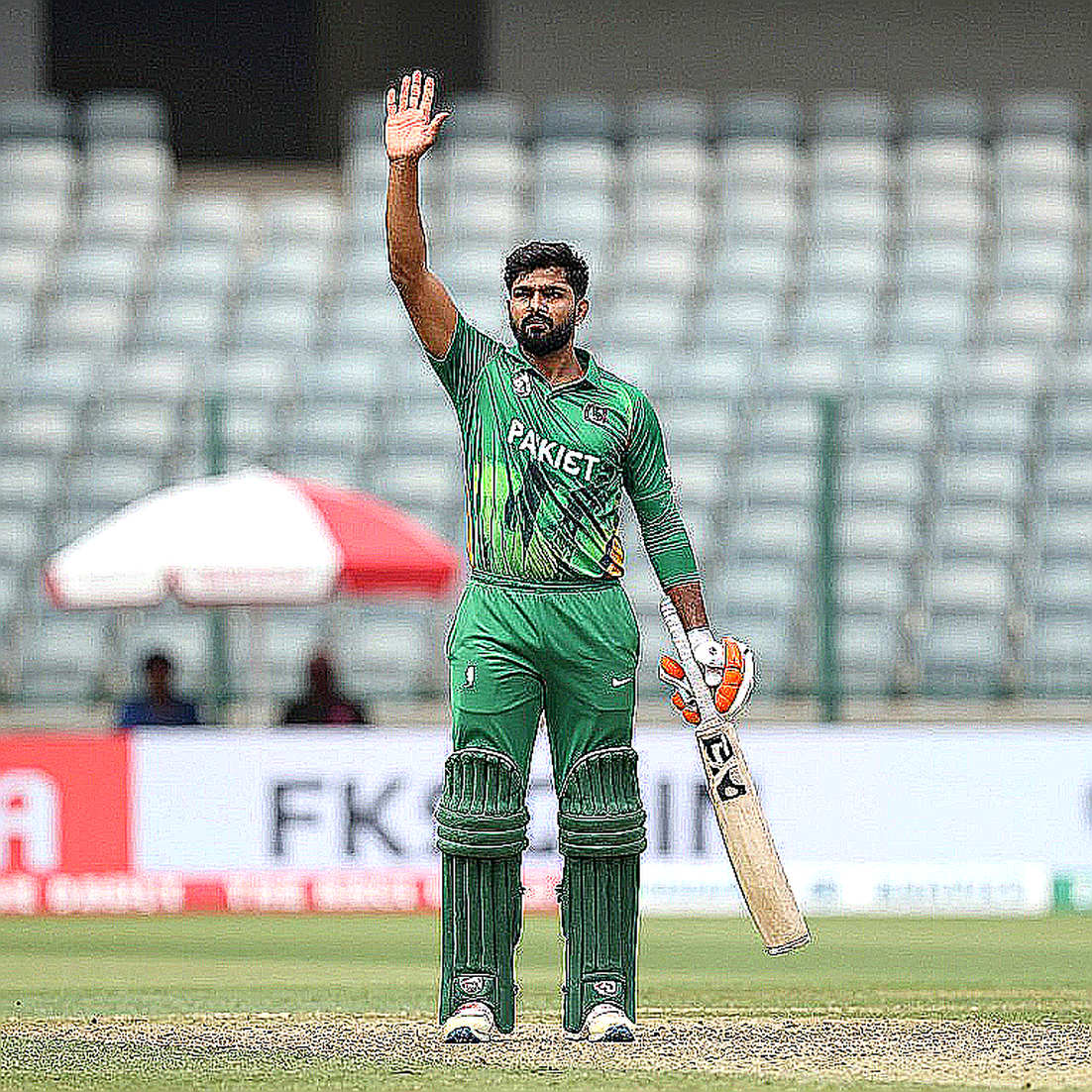
The minister's remarks supply the event's real foundation. He praised it as a fine arrangement for the people who send remittances home, said it would encourage them, and described thirty countries' cricket clubs as sports diplomacy. He reached for Hamza Chowdhury as proof that diaspora talent can enrich a national image, and hoped that someone from the diaspora would one day play for the national cricket team.
Kabir Ahmed Bhuiyan, the group CEO, laid out the economic frame: convert Bangladesh's vast young population into skilled manpower through proper training, use the international contacts and experience of established expatriate Bangladeshis to open overseas employment channels, and grow foreign exchange earnings. Founder Nirjan Mosharraf said the day had arrived after much hard work, called the present government sports-friendly, and thanked the Bangladesh Cricket Board for promising maximum cooperation. He added that the organisers are in regular contact with an ICC event manager to see the tournament through properly.
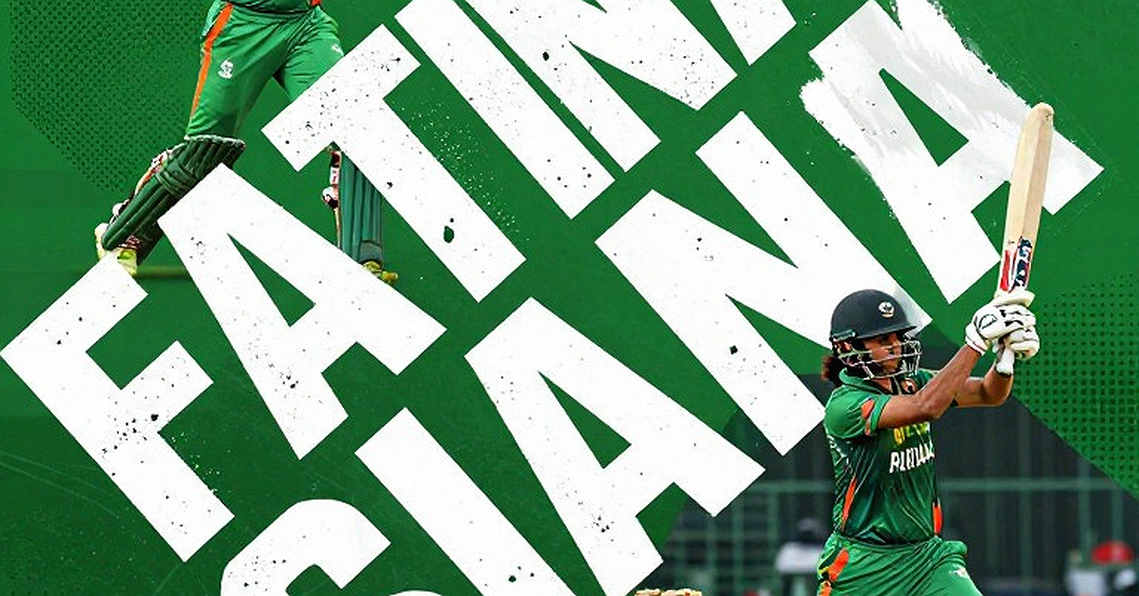
The structure is this: clubs from thirty countries — Australia, the United States, the United Kingdom, New Zealand, China, Malaysia, Oman, Canada, Ireland, Sweden, Poland, Italy, Saudi Arabia, Kuwait, Pakistan, Sri Lanka, South Africa, Afghanistan, Scotland, Germany, Singapore, the Maldives, the Netherlands, the United Arab Emirates, Qatar, Japan and Bangladesh among them — will take part for the first time. Hosting is split across ten countries: Australia, the United States, the United Kingdom, Italy, Japan, Bangladesh, Oman, the UAE, Qatar and Malaysia. The opening match is in Australia; the final is in the UAE.
On the dais, Mehrab Hossain Opi, Bangladesh's first ODI centurion, called the initiative praiseworthy and said that running it consistently, alongside everyone working together for the development of Bangladesh cricket, would make it count. Former cricketer Javed Omar Belim said it would build a cricket culture among expatriates and push Bangladesh's cricket forward internationally. MP Sanjida Islam Tuli spoke of the diaspora's remittances and their contribution during the July movement, and committed to staying with the event. Women's cricketer Jannatul Sumona was on the stage, as were BCB director Rafiqul Islam Babu and adviser Afzal Hossain, along with Belal Uddin Tuhin, organiser Masum Bhuiyan, Shariful Haque Shipon, Rimon Islam and Pitupi Group chairman SM Mostafizur Rahman.
My passport is Australian and I write about cricket from Pune. That distance lets me ask the questions a home-beat reporter, whose livelihood is settled in the same room, finds harder to put. And in years of watching these launches, the first thing to disappear is always the thing nobody asks about: whose money is going in, and whose labour is going out.
Expatriate amateur cricket has no institutional home. It sits outside the ICC's membership architecture, below the domestic competitions of national boards, and at club level it belongs to people who carve out a Sunday between a job and a shift. From the labour camps of Dubai to the club grounds of London, this cricket has no scoring system, no rankings, no contracts. So when a promoter presents a map of thirty countries, what is actually being proposed is the assembly of thirty distinct club cultures under one trophy, most of which have never met each other.
The first hard clue is the host list, because it is not a cricket map. It is a migration map. Qatar, Oman, Kuwait, Saudi Arabia, the UAE, Malaysia — these are the corridors Bangladeshi labour has moved through for decades. Italy, the UK, the US, Australia, Japan — these are the older and newer diaspora addresses. Hosting was not assigned where the cricket structure is strongest; it was assigned where the Bangladeshi population is dense enough to raise a club and rent a ground. That distinction is not small. A tournament whose geography is set by migration will have its playing depth set by migration too.
The second clue is the ICC reference. Regular contact with an ICC event manager sounds like a credential; technically it is operational consultation. A private promoter's thirty-club event does not acquire ICC sanction, T20I status, ranking points or selection weight from it. The event manager's job is to see that conditions of play, ground readiness and reporting sit inside the regulations — not to certify that the tournament occupies a rung on international cricket's ladder. That gap is easy to blur in the glow of a launch, and every expectation afterwards is built on the blur.
The third clue matters most: amateur means unpaid. No prize pool, match fee, travel grant or accommodation arrangement was announced. That silence is not an oversight; it is the model. The standard economy of expat club cricket is that the player buys his own ticket, his own kit, his own bed, and often his own leave. Ten host countries mean at least ten separate journeys to plan, each with a visa, insurance and a shift swap attached. The clubs that can absorb that are the ones actually competing. The tournament's first selection criterion is not talent. It is the price of a ticket. The figure of thirty countries therefore measures diaspora purchasing power, not the depth of the cricket.
Here I will repeat my oldest complaint about this beat: we measure sporting events by their numbers rather than their situations. Thirty countries is a large number, but the question is how many of those thirty clubs have an audited budget this year, how many have a coach, how many have a women's team, and how many have played a single match in the last twelve months. The announcement answers none of it. And when there is no answer, the story stops exactly where it started — on the stage.
Now the part my eye went to first. Women's cricketer Jannatul Sumona was on the stage. A woman MP spoke about the diaspora's contribution. But the announced structure contains no women's draw, no women's clubs, no women's fixtures, no women's prize. There was a woman cricketer on the podium and no women's team in the draw. It is the same pattern I have watched repeated through every large launch since the early months of the Women's Premier League in 2026 — women in the decoration of the ceremony, absent from the paperwork of the structure. And that pattern breaks on dates, not on commentary.
One more thing must be recorded, because the most attractive sentence in this launch is the Hamza Chowdhury one. The comparison is emotionally effective and structurally wrong. He is a second-generation, European-born footballer who climbed a club academy staircase where age-group selection systems, scouting networks and a contract market existed. Bangladesh's national cricket team is picked through domestic first-class cricket, A-team tours and age-group structures. Nothing in the announcement describes a mechanism that takes an expatriate club cricketer to the first step of that staircase — no diaspora trial, no scouting programme, no age exemption, no talent fund. A wish and a mechanism are different things, and in cricket the first is worth nothing without the second.
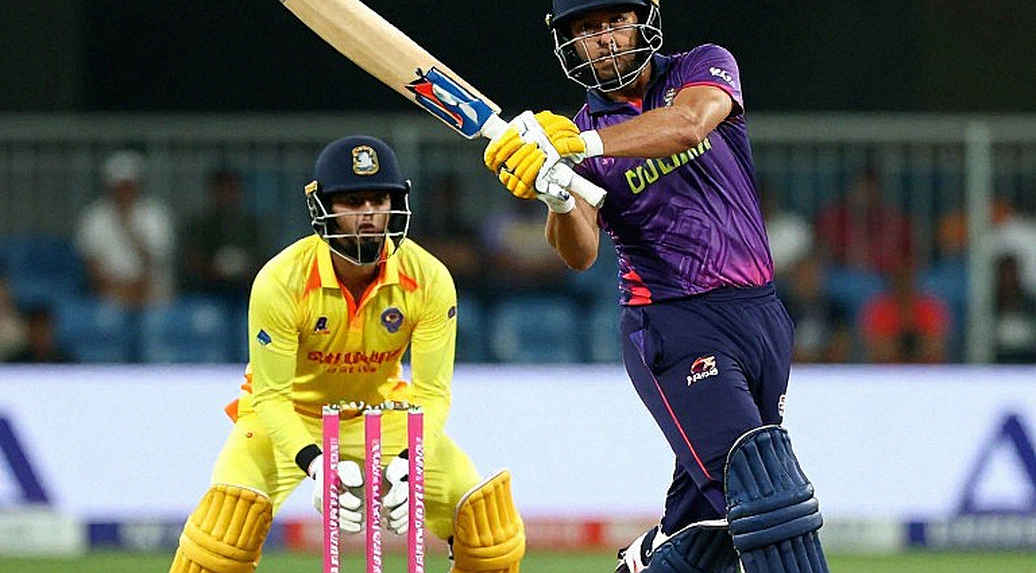
I turn the same question on my own country, because the opening match is due in Australia and its amateur structure is nobody's model either. Grade cricket's pyramid there is controlled by state associations, and the clubs beneath it are so bound to their competition calendars that clearing a fortnight for a multi-nation external tournament is not simple. Bangladesh-origin clubs in Sydney and Melbourne live inside that double bind — holding a place in the local league while trying to build an identity outside it. Australia's central contract system and players' association machinery are strong, but that machinery does not reach the people playing amateur club cricket, and that limit is what stops any comparison from becoming a one-way sermon.
Then the part every camera will turn to. The final in the UAE, with Shah Rukh Khan at the gala night. In the ceremony's logic this is coherent: a star brings an audience, an audience brings a sponsor. In the sport's logic it means the spectacle is concentrated at the end while the labour is scattered at the beginning. Where the money shows, the camera will be; where the work is, there will be no broadcaster. No broadcast deal, streaming rights or media partnership has been announced for a group stage spread across ten host nations. The direct consequence is that the hardest part of an expat club cricketer's tournament — the first match — will pass unrecorded, and no archive of it will exist.
This is where I find my sharpest contrarian angle, and it is not a suspicion about anyone's intent. It is about the argument the event is using to claim its place. The praise from the podium was not for cricket. It was for remittances. The player was invited first as a remittance envoy and second as a cricketer. This version of sports diplomacy makes the game an auxiliary unit of foreign policy, and under it the event will be judged by how much image it built rather than how many players it made better. That is not wicked. It is simply not sport.
The practical risk follows. An event that grounds its justification in an economic argument will also close quietly when the economics shift. If remittances rise, the rationale hardens; if the flow turns or a sponsor's attention drifts, the second edition is cancelled without a press conference. I have seen this film. In 2026 I spent three weeks interviewing fifteen women cricketers about how the pandemic had stripped them of central contracts and match fees; that report never ran, and when events close quietly, those stories close the same way. So the question is not whether a first edition happens. It will. The question is who announces the date of the second, and how many clubs are still alive by then.
I know there is something genuinely good here, and I will not shrink it. The expatriate Bangladeshi cricketer has never had a shared stage; a club in Dubai and a club in London have never played for the same trophy. If this tournament achieves only that — a durable line between clubs in thirty cities — it will have done more than all its noise. And if, alongside it, a club puts its women's team on the same bus, the event will have outgrown the speech it was launched under.
What I want now is not a prediction but a calendar. First date: the squad registration deadline, because it will show how many of the thirty are actually coming. Second: a written announcement of travel grants or accommodation support, without which this remains a private hobby of the wealthier diaspora. Third: a women's draw, because the woman cricketer on that stage needs fixtures more than she needs a ceremony. Answer two of those three and I will withdraw my doubt and go write the cricket from the ground.
On the night of the final in the UAE, when the gala begins and the cameras tilt toward raised hands on a stage, one question will stay in the air, answerable only by a scorecard: how many players bought their own ticket to reach that trophy, and how many of them were women.